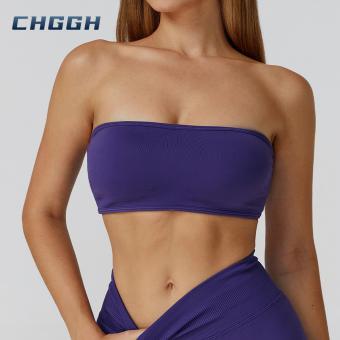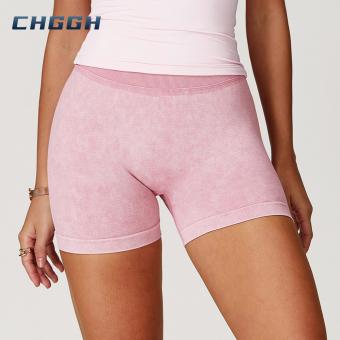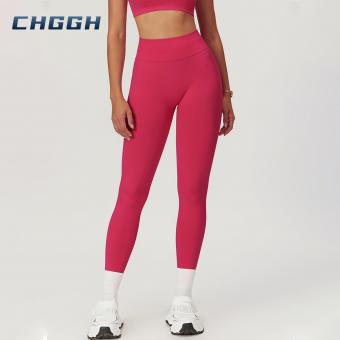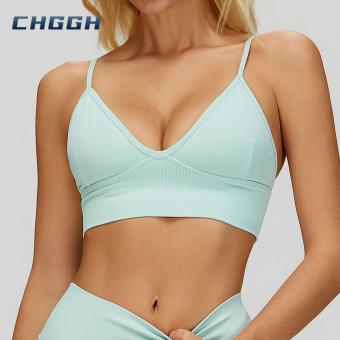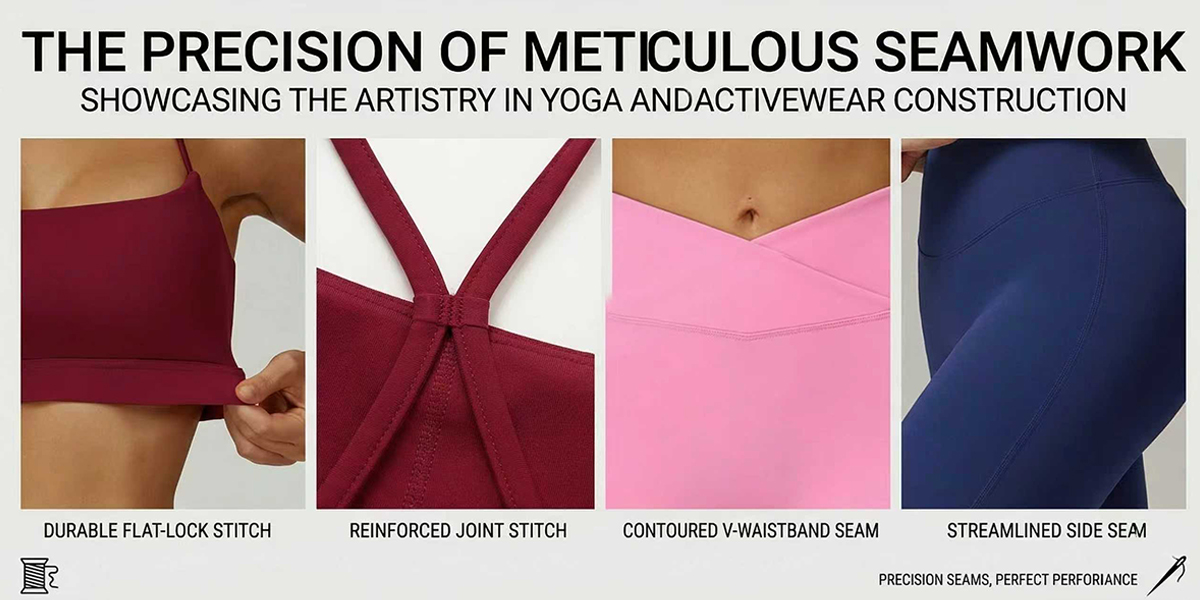
In yoga wear and activewear design, stitching is far more than a functional necessity. It plays a critical role in balancing performance, durability, and visual refinement.
For brands targeting premium markets in the United States, Europe, the United Kingdom, and Australia, seam construction and colour coordination are essential elements that directly influence perceived product quality and brand positioning.
At our manufacturing facility, stitching is treated as a design discipline — where technical execution meets visual intent.
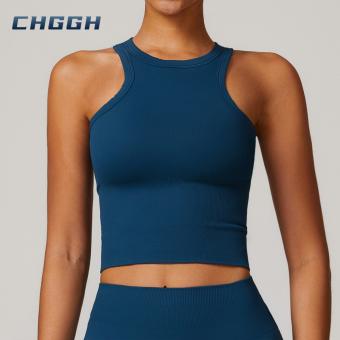
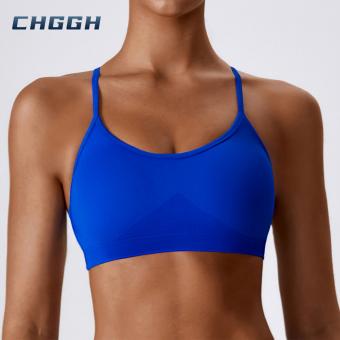
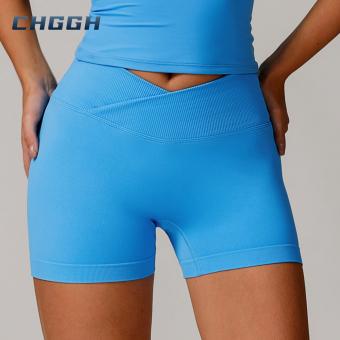
Tone-on-tone stitching refers to matching seam colour as closely as possible to the base fabric, typically controlled within ΔE < 1.0.
Visual effect: Clean, seamless, and refined
Application: Premium leggings, sculpting bras, minimalist collections
Value: Enhances fabric texture while reducing visual noise
This is currently the most widely adopted solution in B2B production due to its consistency and low design risk.
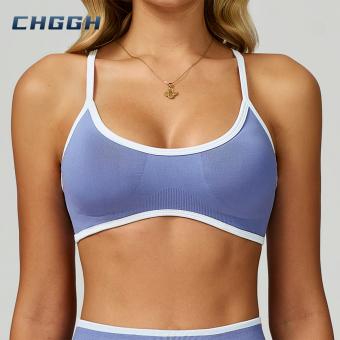
Contrast stitching uses visibly different colours to create defined lines across the garment.
Visual effect: Highlights body contours and panel structure
Application: Training wear, CrossFit apparel, athleisure collections
Value: Turns seams into design features that enhance shape perception
When applied strategically, contrast stitching can visually sculpt the body and reinforce brand identity.
For heathered or multi-tone fabrics, stitching is selected from a mid-tone within the fabric palette.
Visual effect: Subtle, layered, and naturally blended
Application: Outdoor running wear, yoga layering pieces
Value: Maintains depth without creating harsh contrast
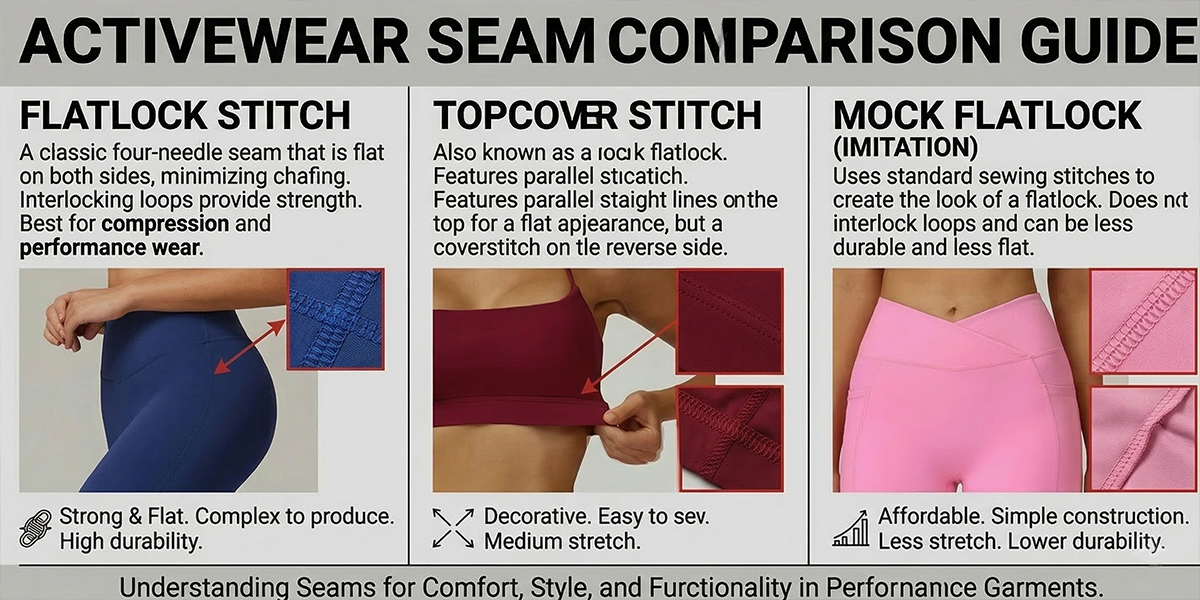
Stitch appearance is not defined by colour alone — seam construction significantly impacts both performance and aesthetics.
Wide, flat seams (~6mm), highly visible
Ideal for both tone-on-tone (professional look) and contrast (technical, industrial feel)
Reduces chafing in high-movement zones
Slimmer, more refined lines
Common in hems and cuffs
Best paired with tone-on-tone for a clean finish
Narrower and lighter alternative to flatlock
Suitable for lightweight yoga fabrics
Maintains comfort with a softer visual presence
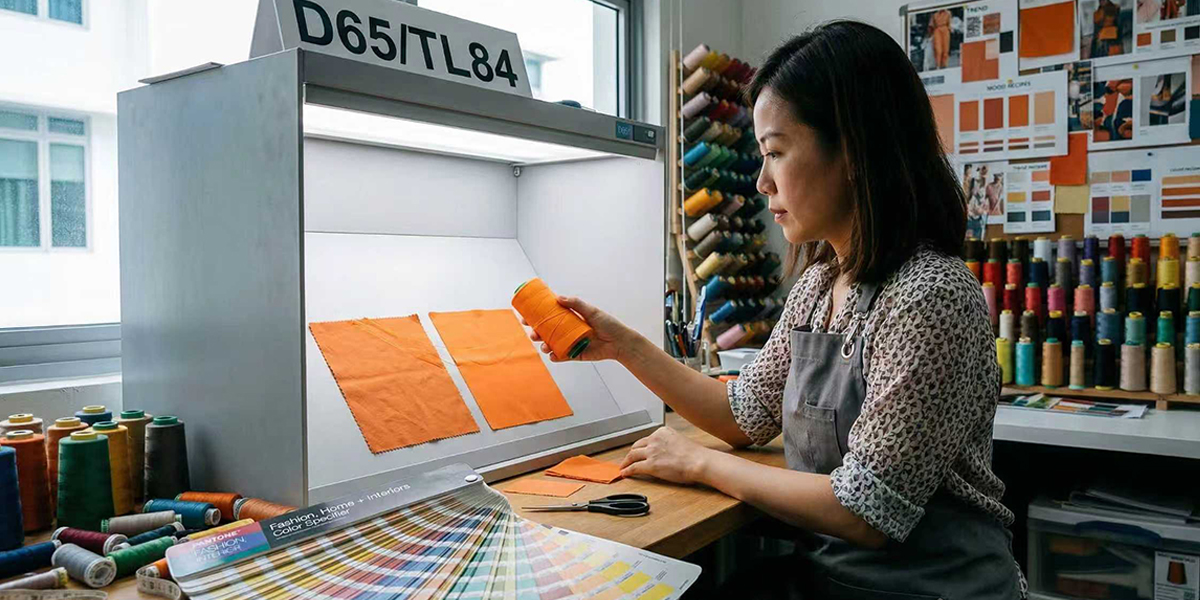
To ensure consistency, we recommend defining stitching colours using Pantone (TPX/TCX) references or lab-dyed thread samples matched directly to fabric batches.
When using dark contrast stitching on light fabrics (e.g., black thread on white fabric), thread colour fastness must reach Grade 4 or above to prevent colour bleeding during washing or perspiration exposure.
Most performance stitching uses polyester or nylon threads, which may have a different sheen compared to fabric.
For matte fabrics → use matte thread
For performance gloss fabrics → standard filament thread is acceptable
This alignment is essential to avoid unwanted shine that may reduce perceived product quality.
In Western markets:
Europe / UK / US / Australia favour earth tones, muted greys, and classic black
Tone-on-tone remains dominant in premium yoga collections
Contrast stitching is often used in retro-inspired athleisure or training lines
Reflective stitching is increasingly applied in performance wear, offering both visibility in low light conditions and a technical aesthetic
In modern activewear, stitching is no longer a background detail — it is a visible indicator of engineering precision and brand intent.
By integrating controlled colour matching, advanced seam construction, and performance-tested materials, brands can elevate both product functionality and perceived value.
At scale, these details define consistency. At retail, they define trust.

Aktibong magsuot, magsuot ng yoga, magsuot ng gym, tagagawa ng fitness wear
 Suportado ang IPv6 network